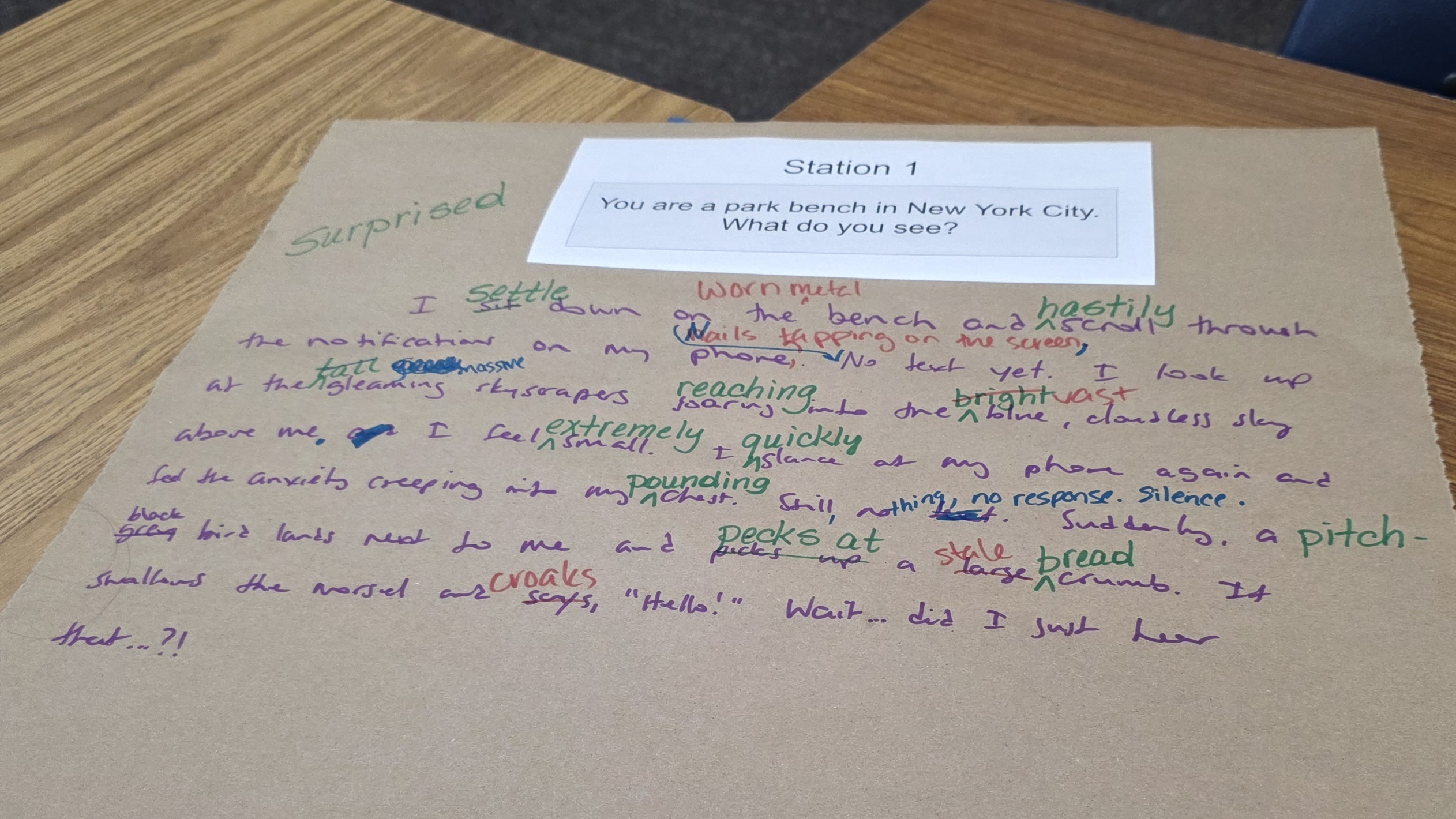

Have you ever asked your students to revise their essays, only to have them add a single period, capitalize a proper noun, and tell you they're “done”? We've all been there, and it's frustrating to see students mistake basic editing for the deep, transformative work of true revision.
Many of us introduce ARMS (Add, Remove, Move, Substitute) and CUPS (Capitalization, Usage, Punctuation, Spelling), but even with these tools, students often stay on the surface.
I'm currently writing to you from a writing center workshop where I'm revising my own dissertation. Immersing myself in my research on how college freshmen experience writing has led me to rethink how we approach revision in the secondary English classroom.
To prepare our students for writing for real audiences, we need to help them distinguish between global and local concerns. In my current framework, I categorize the writing process to emphasize this distinction:
The Writing Framework
- Creating
- Prewriting (brainstorming)
- Organizing (brainstorming)
- Writing (drafting)
- Revising
- Global Concerns (the creating stage)
- Tip: Focus on Higher-Order Concerns first. This includes ideas, evidence, organization, and whether the draft actually meets the needs of the intended audience.
- Global Concerns (the creating stage)
- Polishing: Note that it’s important to intentionally include higher-order/global concerns in the creating phase of writing and as teachers, we need to make sure this is clear to students so neither of us are jumping from writing to editing without actual revision work.
- Revising
- Local Concerns (the polishing stage)
- Tip: Move to sentence-level issues once the ideas are solid. This includes clarity, style, flow, and the “CUPS” of traditional editing.
- Outlining: Before or after drafting depending on student’s process
- Students learn their error patterns
- Read aloud (student or a friend or mentor) to hear how the text sounds, pay attention to the reader’s breathing to hear for sentences that need to be revised
- Step away and come back with fresh eyes
- Local Concerns (the polishing stage)
- Editing improves sentences and style
- Encourage students to treat this stage as distinct from revision.
- Help students identify and track their own recurring errors for future reference
- Have students swap papers and edit with specific focuses (verb tense, capitalization)
- Proofreading corrects final surface errors
- Revising