I help
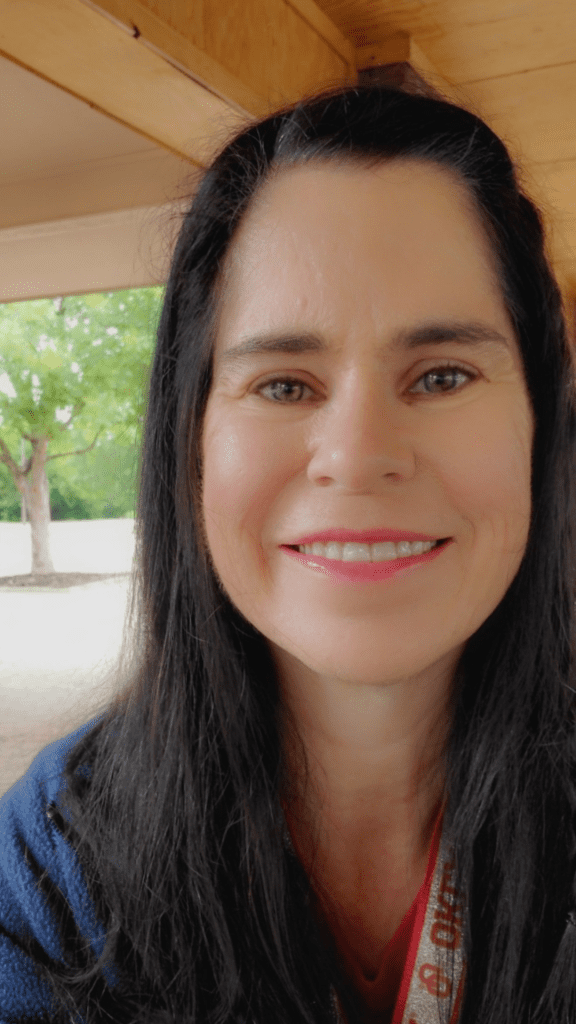
Hi, I'm Michelle. I help teachers build readers and writers.
For more than a decade, I've been asking one question:
How do we create classrooms where students don't simply complete reading and writing assignments—but begin thinking of themselves as readers, writers, speakers, and thinkers?
That question has guided every part of my career.
I've taught middle and high school English, worked alongside hundreds of college writers in university writing centers, taught first-year composition, mentored new teachers, conducted literacy research, and collaborated with educators through the Oklahoma Writing Project. Along the way, I've learned that students thrive when classrooms combine meaningful reading, authentic writing, thoughtful discussion, and strong relationships.
That's why I created reThink ELA.
Today, everything I publish, from classroom resources and professional learning to original fiction and literacy frameworks, is designed to help secondary English teachers build stronger communities of readers and writers.
Why I Still Teach
People sometimes ask whether I still teach.
The answer is yes -- just not in the same way I did when I had my own middle and high school English classroom.
Teaching has never been just a job to me. It's how I make sense of the world and how I hope to leave it a little better than I found it. During my 10+ years as a secondary English teacher, I watched students discover books they couldn't put down, find confidence in their writing, and realize that their voices mattered. Those moments continue to shape everything I create.
Today, I have the privilege of seeing literacy from a broader perspective. I work with first-year college writers, collaborate with classroom teachers, mentor future educators, and continue learning through literacy research and professional communities. Those experiences have shown me that while standards, technology, and educational policies may change, students still need many of the same things they have always needed: meaningful reading, authentic writing, thoughtful feedback, supportive relationships, and teachers who believe in them.
That's why I continue creating resources through reThink ELA.
Every lesson, article, framework, and short story I publish is shaped by real conversations with teachers and students, informed by research, and grounded in the realities of today's classrooms. My goal has never been to tell teachers how they should teach. Instead, I hope to provide ideas, resources, and encouragement that help educators create classrooms where students become thoughtful readers, confident writers, and lifelong learners.
Because I still believe what I believed when I welcomed my very first class of students: every young person has a story worth telling, and every teacher has the opportunity to help them discover their voice.
Where Teaching, Writing, and Research Meet
Every chapter of my career has changed the way I think about literacy instruction.
As an award-winning journalist, I learned that writing isn't just about following the formulas I'd learned; it's about communicating clearly, asking thoughtful questions, and connecting with an audience.
As a middle and high school English teacher, I discovered that students grow most when they have opportunities to read widely, write often, revise thoughtfully, and discuss ideas in a classroom community where their voices matter.
Working in university writing centers introduced me to hundreds of writers with different backgrounds, strengths, and challenges. No two students approached writing in exactly the same way, reminding me that effective instruction must be responsive rather than one-size-fits-all. Teaching first-year composition reinforced another important lesson: students don't stop becoming writers when they graduate from high school. Writing development is a lifelong process that continues well beyond a single classroom or course.
My doctoral research gave me the opportunity to step back and study these experiences more closely. By listening to students describe their own writing journeys from high school into college, I saw just how much relationships, classroom culture, meaningful feedback, and authentic writing opportunities shape students' confidence as writers. The research confirmed much of what excellent teachers have known for years—and it challenged me to think even more deeply about how we prepare students for the writing they'll do throughout their lives.
Those experiences continue to shape every resource I create. Whether I'm developing a lesson, writing an article, designing a discussion activity, or creating a professional learning experience, my goal is the same: to bring together classroom experience, literacy research, and practical teaching in ways that help educators build stronger communities of readers and writers.
Working Alongside Educators
One of the greatest privileges of my career has been working alongside teachers who care deeply about their students and their profession.
Although I no longer have my own secondary classroom, I remain closely connected to education through university teaching, teacher preparation, professional organizations, conferences, classroom partnerships, and ongoing conversations with educators across the country. Those experiences continually remind me that no two schools, communities, or classrooms are exactly alike.
That's why I don't believe in one-size-fits-all solutions.
Instead, I strive to create flexible resources that teachers can adapt to meet the needs of their own students. Whether I'm speaking with a first-year teacher, collaborating with a veteran educator, mentoring future teachers, or presenting at a conference, I leave every conversation having learned something new.
Professional organizations have played an important role in that journey. Through my work with the Oklahoma Writing Project, the Oklahoma Council of Teachers of English, writing center organizations, university partnerships, and literacy conferences, I've had the opportunity to exchange ideas with remarkable educators who continue to challenge my thinking and inspire my work.
Those relationships keep me grounded. They remind me that the best educational ideas aren't developed in isolation: They grow out of collaboration, reflection, research, and the everyday experiences of teachers and students.
That's the spirit I hope you'll find throughout reThink ELA: not a collection of answers, but a community built around sharing ideas, supporting one another, and helping every student discover the power of reading, writing, speaking, listening, and thinking.
Education has always been a conversation, not a monologue. If you've discovered a lesson that worked, a book your students loved, or a question you're still trying to answer, I'd love to hear from you. Some of my favorite resources on reThink ELA began with conversations like those.