
I spent a recent Saturday morning at the Oklahoma Writing Project Back to School Drive In with a wonderful group of new teacher consultants. I love spending time talking about teaching, listening to each other’s stories, and encouraging one another as we navigate the systems in which we teach.
This particular morning felt especially meaningful because I had also spent part of my summer coaching these educators during the OWP Invitational Summer Institute. For three weeks, they wrote together, read together, talked about their classrooms, and developed workshops based on practices they use with their own students. Yesterday, I got to watch them share those workshops with other educators from our communities.
There is something deeply satisfying about seeing an idea move from summer conversations in Collings Hall to a polished professional development session that another teacher might carry back into a classroom.
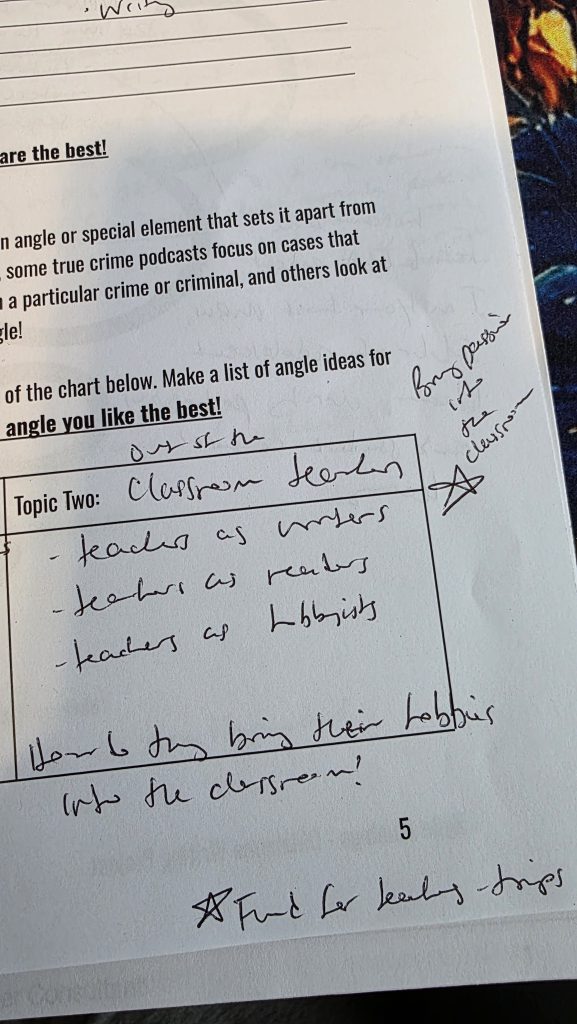
One session in particular focused on using podcasts with students. As I listened, I found myself thinking about my own long-dormant reThink ELA Podcast and how much I would enjoy bringing a segment of it back with a slightly different purpose. I want to talk with classroom teachers about the interests, hobbies, experiences, and strange little obsessions they bring into their teaching—and how those parts of themselves become invitations for students to read, write, think, and create.
Because some of the most memorable teaching ideas begin with a teacher saying, “I love this. I wonder how I could use it with my students?” For me, that was a love of traveling, of taking journeys and documenting them combined with my love of reading.
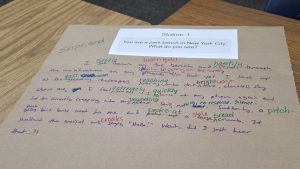
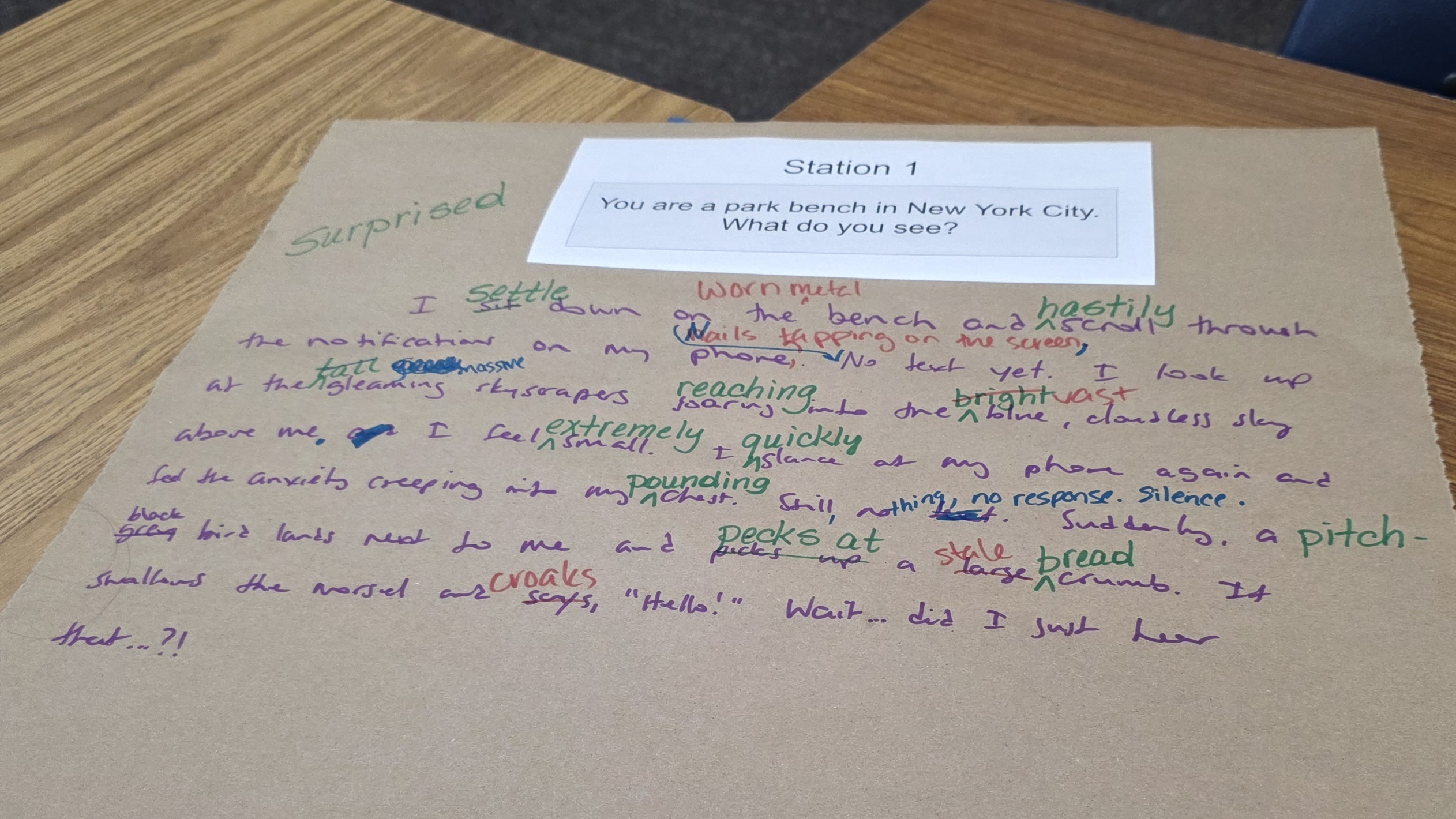
Another workshop explored writing mood. Instead of simply talking about how authors create atmosphere, we got to write. I worked alongside other teachers as we responded to prompts and then revised one another’s drafts to create a specific mood. With each revision, we made deliberate choices about diction, detail, pacing, and atmosphere, building on what the previous writer had started. By the time we had all contributed to each story, we could see how much a piece of writing could change through a series of purposeful decisions.
Experiences like that remind me why professional learning with other teachers matters so much to me.
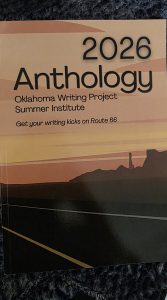
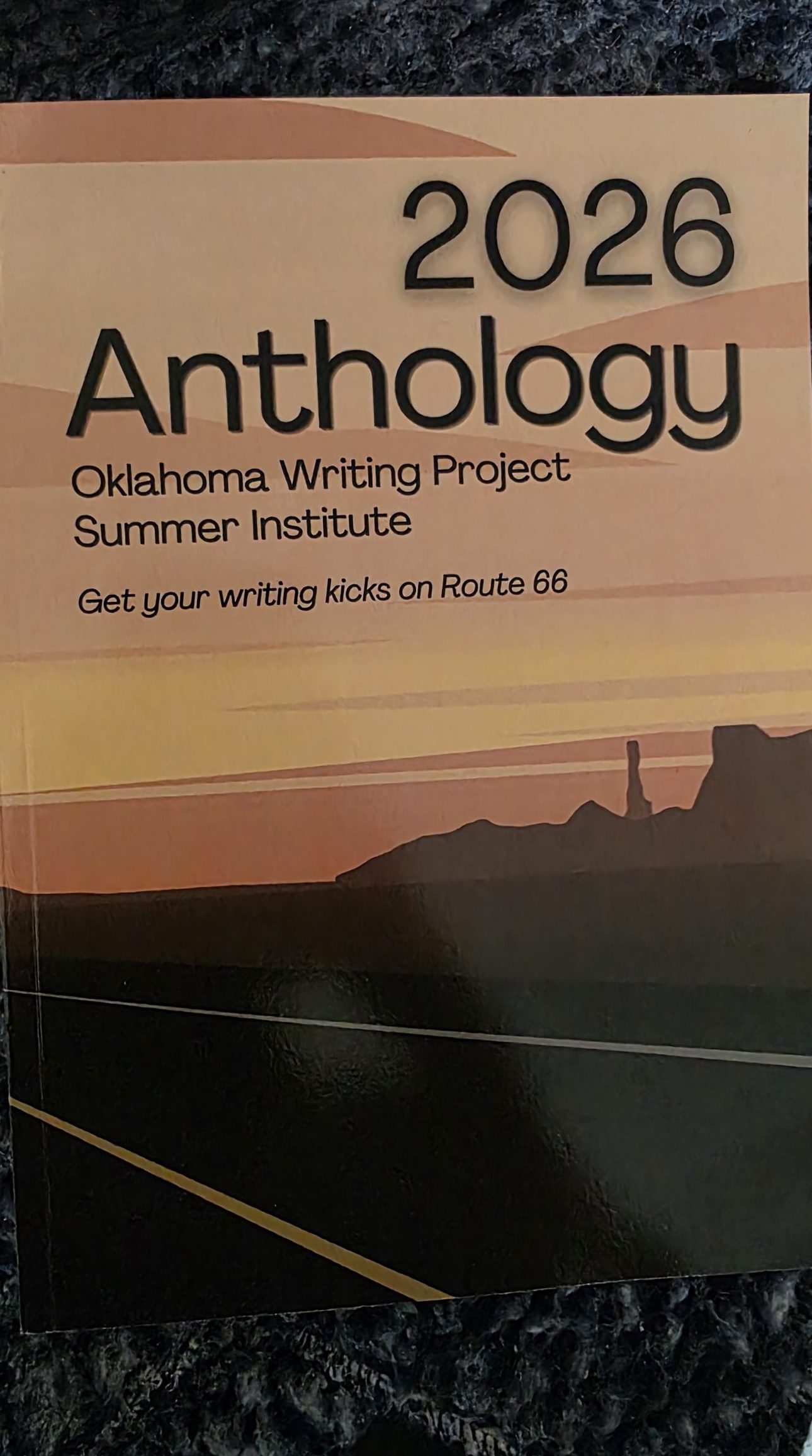
After the workshops, we reconvened at a local restaurant for lunch and opened the anthologies containing the personal writing we had created in July. Those pages held pieces of ourselves: stories, memories, reflections, and other writing that had grown out of the time we spent together in writing groups and author’s chairs. The anthology serves as evidence of what can happen when teachers are given time and permission to be writers, too. Not only did OWP feed us professionally, it also fed the creative parts of us that need space to create, reflect, connect, and remember why writing matters in the first place.
That may be one of the things I value most about the Oklahoma Writing Project: Teachers are treated as people who create professional knowledge, rather than simply people who receive it.
A teacher who has figured out how podcasts can help students find an authentic audience has something worth sharing. So does the teacher who has developed a way to help students understand mood by creating it themselves. So does the teacher who has learned how to reach a reluctant writer, build a classroom community, make poetry less intimidating, or connect a personal passion to a literacy lesson.
In just a few hours, I got to see the fruits of several weeks of that work.
And I left with new ideas for my own teaching, a renewed desire to start interviewing teachers again, and the same feeling I often have after spending time with other educators who care deeply about their work: I want to go make something.