

Sometimes, what looks like laziness or a refusal to participate is actually paralyzing perfectionism.
A student may leave the page blank, avoid sharing, or insist that they “don’t care” because trying (and possibly getting it wrong) feels more frightening than doing nothing at all.
I have worked with several students, particularly mathematically inclined students who earned excellent grades, who became almost angry when given choices or pushed to grow instead of simply completing an assignment. They were accustomed to clear directions, correct answers, and predictable measures of success. An open-ended writing task asked them to make decisions, take risks, and create something without knowing exactly what an “A” looked like.
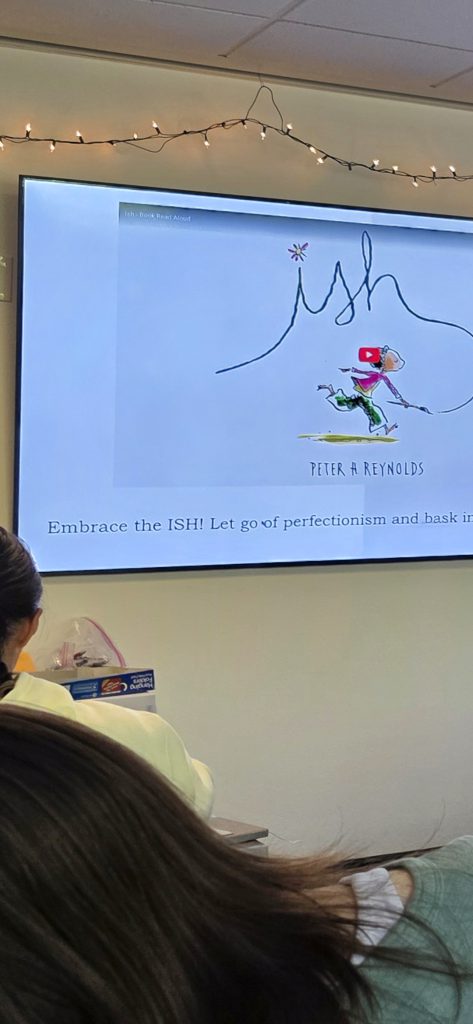
That is one reason I like to begin the school year with Ish by Peter H. Reynolds. The book gently challenges the idea that our work must be perfect to be meaningful. A drawing can be vase-ish. A first draft can be story-ish. An idea can still be forming.
Students sometimes need permission to create something unfinished, uncertain, or imperfect. More importantly, they need a classroom where trying is not treated as evidence that they have failed.
Before we label a student unmotivated, it may be worth asking whether they are refusing to work—or protecting themselves from the possibility that their best effort might not be perfect.