
A veteran teacher recently shared that her usual redirection still stops unwanted behavior—but now it also leaves the room completely silent.
That made me think about how I respond to disruptions and silences in my classroom. For minor disruptions, I try to make the redirection as small as the behavior. I might move closer to the student or tap lightly on the desk. At the beginning of the year, I explain that the tap does not mean they are in trouble. It simply means I am helping them refocus.
Many students enter our classrooms after years in systems that have penalized their humanity. I want mine to know that I operate from trust and respect. I treat them the way I would want to be treated.
If proximity does not work, I quietly ask, “Are you okay?” or “Is everything okay?” If needed, I invite the student into the hallway and ask what is wrong—or how I can be a better teacher for them.
Usually, they tell me everything is fine and return to the work. Sometimes they tell me what is actually happening.
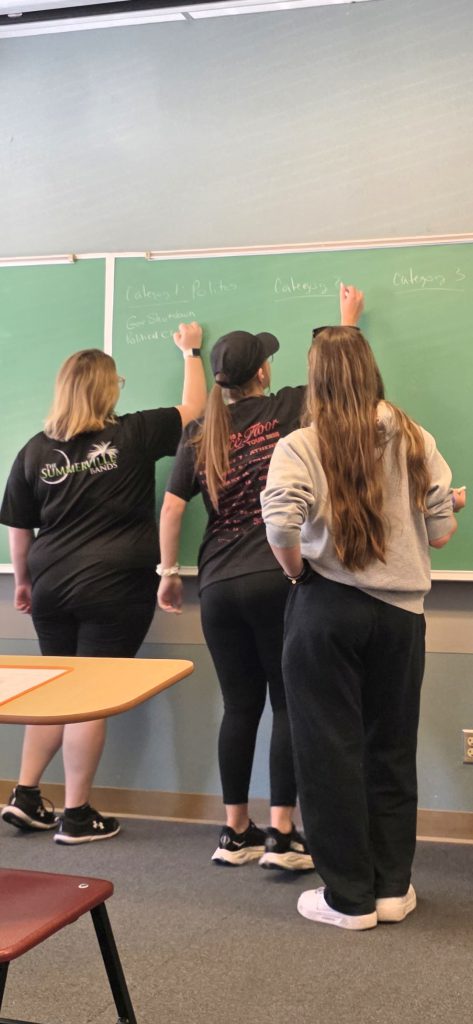
When the whole class becomes silent, I use think-pair-share. Students write for two to five minutes, share with a partner or small group, and then choose someone to speak or write a response on the board.
The room usually comes back to life quickly.
Sometimes students do not need a stronger correction. They need reassurance that they are still respected—and a safer way back into the conversation.